Pages

Wednesday, June 11, 2014

Wisdom of Euell Gibbons -Cleavers


I have been reading the series of "Stalking the...." by Euell Gibbons as a way to expand my understanding of wild food and the bits of wisdom he includes I have not seen anywhere else. The books he wrote are true treasures of knowledge that I want to help pass on to future generations. So for those of you that may not have heard of this wonderful series, I urge you to go pick up the books but if you don't have the time, I will highlight some of the things that I found particularly interesting.

I am currently staying on the NE side of Portland though I live in Wisconsin and most of the plants in his books I am already familiar with but haven't encountered them in such vast  quantities that I am seeing in the woods near me in Oregon. I suppose that probably has to do with the high rainfall and fairly easy winters they see here. One plant in particular that I am seeing of in my wood ventures is cleavers. This is a plant that clings to you with such ferocity that it may stop you in your tracks and prevent you from moving forward without the use of a machete. In his book, "Stalking the Healthful Herbs", Euell Gibbons has a chapter dedicated to this plant and the uses for it rather took me by surprise. Apparently is was once common knowledge that a tea or meal made from this herb was used by English ladies for weight loss.

To prepare this herb as a vegetable pick it in early spring - pull the stem and leaves. Steam the plant for about 5 minutes and it is ready to eat! Euell describes it as tasting like spinach. Euell also mentions that the seed-like fruits make the best coffee substitute of any other plant he has tasted. This plant is apparently in the same family as coffee (Rubiaceae) which would explain the taste similarities. For this coffee substitute, gather the little hard fruits during the summer when they are full sized and roast them in an oven until they are golden brown. Use the fruits as you would coffee. There is no caffeine in cleavers. To  use this plant medicinally, collect the plant in May or June when it is in flower and dry it. Keep it in an air tight container and use as a tea for the weight loss properties.

I will be trying all of these ideas out shortly. Thanks Euell!


Tuesday, June 10, 2014

Girl Scout Cadette Tree Badge


Resiliency Training has partnered with the Girl Scouts to come up with a variety of Badge Programs that are fun, interactive and easily brought to any location.

The Cadette Tree Badge starts off with a team building activity to get the girls active and build group cooperation. Then we head into the park to take a look at different trees. We will point out the different type of trees that are in the park and discuss what the trees provide for us. We will talk about how to get water, food and nutrition from trees. The girls will take on the various part of the tree and act out how the tree converts sunlight, water and carbon dioxide into energy and oxygen. Then they will try some pine tea which is packed full of vitamin C not to mention a tasty drink! They will also shell some wild foraged nuts and create a quick healthy snack they will be able to eat right away!

By the end of the class they will have a new appreciation for trees, know the different parts of the tree and what job each performs as well as discuss the process of photosynthesis! This class can be done year round and in any location throughout the Milwaukee area.

The cost of the class is just $15 per girl (troop leaders and adult chaperones are free). To find out more about this class as well as other badge programs, go to www.resiliencytraining.net or call 262-515-5331.


Monday, June 9, 2014

Medicinal Tea Class - Sunday, July 13


On Sunday, July 13, 2014, we will be hosting a Medicinal Tea Class held at 5858 S 43rd Street in Greenfield, WI. This class will be from 1:00 pm to 3:00 pm.

This class is by far one of the most enjoyable and inspiring classes that we teach. There is perhaps no easier way to start incorporating plant medicine into your life than by drinking tea. Most people are already familiar with the uses of tea to soothe the soul but in this class, we take it to the next level and introduce some familiar teas and not so familiar teas that have significant health benefits. We will talk about how to identify common medicinal plants, how to harvest and how to prepare them correctly for the maximum potential. Most of these plants you can grow in your own garden which is in fact where most of our teas will come from. We have a large chemical free garden full of medicinal plants that we will use for class purposes.

In this class, we will be preparing 2 root based teas, two leaf based teas and two flower based teas. The cost of the class is $20 and includes all your teas, a light snack and handouts. This is a great social event as well to meet and talk to other like minded people. Whether you are a novice or a true tea connoisseur, there will be something for you in this class!

To sign up for this class, go to www.resiliencytraining.net or call 262-515-5331 for more information.


Monday, June 2, 2014

Resiliency Summer Classes

Summer has finally arrived in Wisconsin and Resiliency classes will be in full force. If you are looking to learn how to make your own soap/body care products, learn outdoor skills, or dive into identifying and cooking wild edibles, then you will want to check out all of our amazing classes. Even as technology is a huge part of most households, there is a significant movement to revert to skills and knowledge of the past. I am thrilled to be a part of this movement of getting back to the basics....growing my own foods and herbs, creating natural and chemical free household products and incorporating wild edibles into my diet for outdoor exercise and bountiful nutrients. I thoroughly enjoy the variety of people that come to my classes who also want to live more sustainably. I met a family who came together from different states to buy a farm in Wisconsin and wanted to learn about the wild edibles and medicinal plants that were on their property. They are already raising their own chickens and goats as well as planting a huge garden. I will be doing a wild edible class at their farm in the Fall (more information coming at www.resiliencytraining.net).

I will be continuing to offer classes to the Girl Scouts as a part of the Badge Program which includes:
Brownie Hiker, Cadette Trail Blazer, Jr. Camper, Jr. Flower and Cadette Tree. All programs include interactive curriculum from cooking with wild edibles to making a flower healing salve to making quick release paracord bracelets.


Over the next few days, I will be giving an in-depth look at each of the classes coming up in the summer of 2014. Of course you can always look ahead at www.resiliencytraining.net.


Tuesday, March 4, 2014

Foraging Article in Natural Awakenings

Please check out the latest Natural Awakenings Magazine where I have written an article on foraging. One of the first herbs that will emerge after the thaw is garlic mustard. This is a must for every foraging enthusiast to identify. Learn about all of its health benefits in this great article on page 29!

http://issuu.com/na-milw/docs/wi_milw_0314_yudu

Sunday, January 26, 2014

New Ache & Pain Cream Class


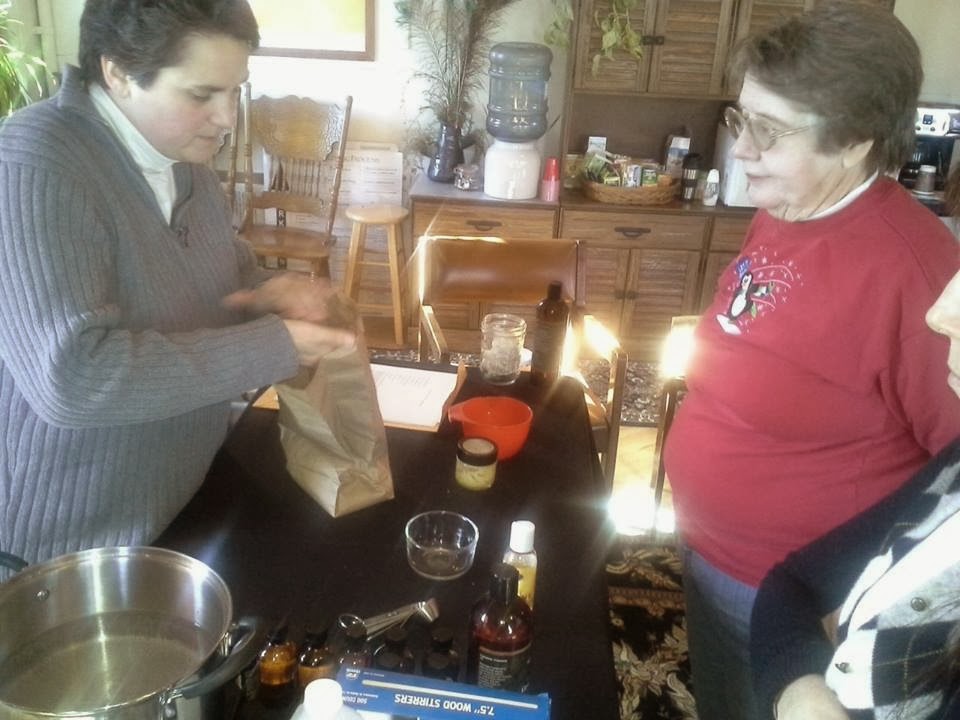
I introduced a new class yesterday co-taught with Susan Haas and held it at Henschel Haus Publishing. Susan and I have created a nice selection of body care products made with only all natural ingredients and put them up on Etsy under the name Green Goddess Gardens. https://www.etsy.com/shop/GreenGoddessGardens
We are passionate about our products and love sharing how to create these simple recipes. Our latest product was designed to relieve aches and pains. It is a wonderful healthy substitute for Tiger Balm. Tiger Balm has a base of Petrolatum. If you are unfamiliar with petrolatum, I have added some information here:
“Petrolatum, which is used as a base for Tiger Balm, commonly known as petroleum jelly, is a byproduct of petroleum. Petrolatum is a soft paraffin or wax mixture sold as a topical skin ointment. It is acknowledged by the U.S. Food and Drug Administration as an approved over-the-counter skin protectant and is used in the manufacturing of cosmetic skin care. However the side effects of petrolatum include finding the petroleum byproduct in breast tumors, suffocation of the skin, premature aging and aggravated acne.
Petrolatum or mineral oil jelly and mineral oils can cause skin photosensitivity or promote sun damage. Petrolatum may interfere with the body's moisturizing mechanism, leading to dry skin and chapping despite its cosmetic use as lip protection. According to the Environmental Working Group, petrolatum may be found in one of every 14 products as well as 15 percent of lipsticks and 40 percent of baby lotions and oils.”  Livestrong.com

Petrolatum will increase the shelf life of a product but in my opinion, it doesn't make up for the damage it does along the way. Our recipe uses only all natural essential oils and beeswax. The added vitamin e is an antioxidant and will help to extend the shelf life. It should last at least 6 months and if stored in a cool area out of the sun, at least a year. I've included the recipe here:
1 tsp. peppermint EO
1 tsp. wintergreen EO
1 ¼ tsp camphor EO
2 tsp. Cajaput EO
¼ tsp. Cassia (cinnamon)
¼ tsp. Clove bud EO
2 TB Beeswax
2 TB Grapeseed oil
¼ tsp. vitamin E
Combine all essential oils into a small glass container.
Heat beeswax and grapeseed oil in a double boiler. Take off heat when beeswax liquefies and add essential oils one teaspoon at a time. Stir continuously until the batch reaches a smooth consistency. Pour into a 2 oz. container.


Wednesday, January 1, 2014

New Etsy Store


After teaching classes on how to make wonderful, organic and natural products using oils, beeswax and herbs, I have partnered with another person to create a line of products to sell under the name Green Goddess Gardens. We now have our products in a store in Milwaukee and available to buy over the internet on Etsy. 

The process of creating Green Goddess Gardens was so much fun! It started with a large garden inspired by permaculture design. We were so lucky to have the Victory Garden Initiative help us out in the design and the hard physical labor of digging out the area.  Through a friend, we connected with an herbalist near Madison who was moving to Vermont. So off I went to see this wonderful garden and see what she had. We were able to purchase some medicinal plants from her that could be transplanted.  I came home with a comfrey plant, st. john's wort, mint, calendula, and mullein.  Shortly after that, some plantain and burdock just showed up one day in another part of the garden. The medicinal herb garden had begun! And as the summer progressed, they flourished! The comfrey plant went from a tiny bug chewed plant to a vigorous giant that stretched itself out over three square feet of space. The thick leaves came up to my waist!

Then the infusions started! We had jars and jars of hot and cold processed herbs, each one allowing healing herbal constituents to merge into the oil preparing to become a variety of salves, body butters, lotions and soaps.

Each batch of product we made was created in small batches for the highest quality.  The soaps were allowed to cure for at least 3 months before packaging. The journey to self-reliance has been such a joy. It all starts with small steps and a shifting of priorities. I love using products that I was a part of creating and which incorporate plants that I cared for throughout the summer. If you have a chance, visit our Etsy shop to see some of the amazing products we've created!
https://www.etsy.com/shop/GreenGoddessGardens